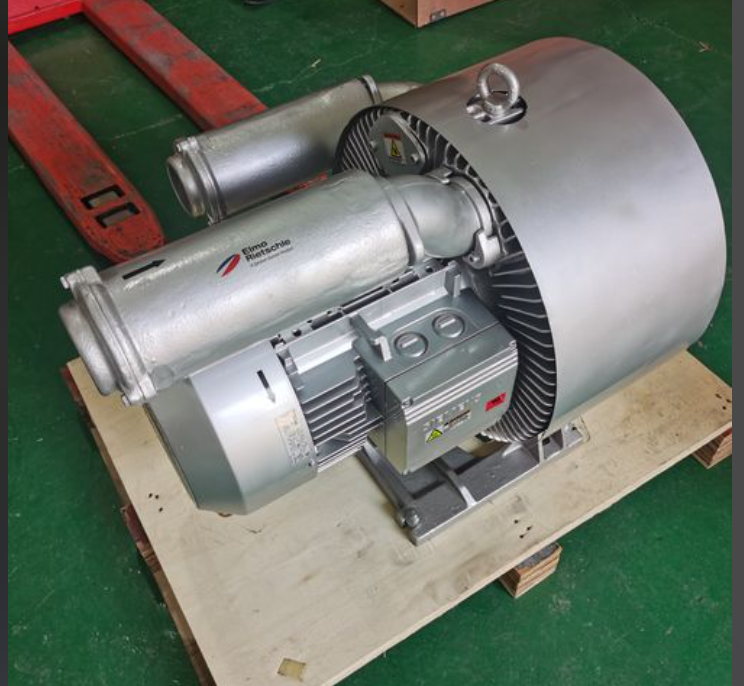
Can You Combine an Elmo Rietschle Vacuum Pump + Gardner Denver Side Channel Blower &Circulation?
Introduction
In laboratory settings—especially in material processing, semiconductor manufacturing, or chemical synthesis—engineers often face a dual challenge: maintaining a "Light Vacuum Environment" while simultaneously achieving "Gas Circulation."
Is it possible to combine a high-end Elmo Rietschle Vacuum Pump with a robust Gardner Denver Side Channel Blower (or similar units from Elektror, Siemens, FPZ, or Nash) to solve this?
The short answer is YES, but it requires a smart setup. Here is a technical breakdown of feasibility, compatibility, and how to configure this system safely.
1. The Logic: Why Combine Them?
This hybrid setup creates a "Draw-and-Loop" closed system:
The Vacuum Pump (e.g., Elmo Rietschle Rotary Vane/Screw): Responsible for establishing the vacuum (Target: to Pa). It offers high ultimate vacuum but isn't designed for high-volume recirculation.
The Side Channel Blower (e.g., Gardner Denver / Siemens): Excels at moving large volumes of gas at low to medium pressure differentials (1–100 kPa).
The Synergy: The vacuum pump keeps the chamber pressure low, while the blower takes the exhaust gas, filters/cools it, and re-injects it into the process, saving on expensive inert gases (like Argon or Helium).
2. Critical Technical Challenges & Solutions
⚠️ Pressure Mismatch:
Risk: The vacuum pump's evacuation speed might overpower the blower, or the blower might pressurize the vacuum line.
Solution: Install a Buffer Tank between the two units to stabilize flow. Use a Variable Frequency Drive (VFD) on the blower to dynamically match the vacuum pump's load.
⚠️ Heat Management:
Risk: Vacuum pumps discharge hot gas (often >80°C). Direct recirculation can overheat your chamber.
Solution: Integrate a heat exchanger or cold trap before the blower intake.
⚠️ Material Compatibility:
Risk: Corrosive chemical byproducts.
Solution: If handling harsh gases, ensure your blower has PTFE coatings or use corrosion-resistant models from NASH (Liquid Ring) or Elektror.
3. Recommended Configuration Example
For a typical "Light Vacuum + Circulation" setup:
Vacuum Unit: Elmo Rietschle V-Series (Dry Running) for clean vacuum down to 0.1 mbar.
Circulation Unit: Gardner Denver G-Series Side Channel Blower (High flow, pulsation-free).
Control: A PLC system linking pressure sensors to automatically balance the speed of the blower based on real-time chamber pressure.
4. Alternative Options
Liquid Ring Pumps (NASH): Best if the gas contains moisture or solvents, though energy consumption is higher.
Regenerative Blowers (FPZ): Good for very light vacuum (>10 kPa), but cannot achieve deep vacuum levels.
Conclusion
Combining an Elmo Rietschle pump with a Gardner Denver blower is a highly efficient solution for cost-conscious labs needing inert gas recirculation. However, success depends on sizing the buffer tank correctly and managing heat.
Need help sizing your system? We stock the full range of Gardner Denver, Elmo Rietschle, Siemens, and Elektror units. Contact our engineering team today for a consultation!