

How to Switch a German Elektror Centrifugal Fan Between Blowing & Suction (Complete Guide)
Elektror centrifugal fans don’t “reverse” airflow internally: the impeller always draws air in at the inlet and discharges at the outlet. To switch between blowing and suction applications, you reconfigure external ducting, valves, and accessories to route airflow correctly—no need to modify the fan internals. Below are scenario-based methods, step-by-step procedures, and key precautions for typical industrial and commercial centrifugal fans.
1) Core principle: blowing vs. suction
Blowing mode (positive pressure): connect the discharge/outlet to the supply duct and deliver air to the target area.
Suction mode (negative pressure at pickup point): connect the inlet to the suction duct/hood so the pickup point is under vacuum; the outlet must still discharge to a safe area via a silencer or exhaust duct.
In short: blow with the outlet, vacuum with the inlet; treat the outlet as exhaust in suction mode.
2) Basic manual switching (no dedicated valves)
Best for small fans and occasional changeovers.
A. Switch from Blowing → Suction
Power off and wait until the impeller fully stops.
Remove the supply duct from the outlet.
Route the outlet to a silencer/exhaust duct (or safe discharge point). Do not fully block it.Install a suction duct on the inlet; add a filter screen and/or intake hood to prevent debris ingestion.
Seal all suction-side joints (flanges/couplers). Air leaks will reduce vacuum significantly.
Start and test.
B. Switch from Suction → Blowing
Power off.
Remove suction duct and the filter/hood from the inlet.
Remove the outlet silencer/temporary routing and reconnect the outlet to the supply duct.
Check connections and run.
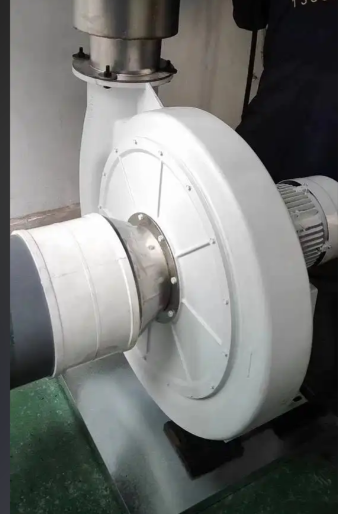
3) Quick switching (3-way duct + valves; no repeated disassembly)
Best for frequent blow/vacuum alternation (e.g., workstations).
One-time duct upgrade
Outlet: install a tee/3-way line:
Branch (1) → supply duct (for blowing)
Branch (2) → silencer/exhaust (for suction mode discharge)
Add a 2-position diverter valve (manual or motorized) to select the branch.Inlet: pre-install suction duct/hood/filter with a shut-off valve to close when not used.
Switching operation (valves only)
Blowing: diverter → “supply duct”; inlet suction valve closed.
Suction: diverter → “silencer/exhaust”; inlet suction valve open.
Optional: replace manual valves with electric actuators for one-button switching.
4) Critical precautions (avoid damage & performance loss)
Never reverse motor rotation to “switch modes.” Reverse rotation causes major performance drop and can damage bearings/motor.
Always protect the inlet in suction mode: use filter screen/hood to prevent foreign objects entering and damaging the impeller.
Seal suction ducting: leaks drastically reduce negative pressure and pickup performance.
Never fully block the outlet: the fan must discharge; a fully sealed outlet can overpressure and overheat, risking housing/motor failure.
Match fan selection to duty: long suction distance (e.g., >5 m) needs adequate static pressure. Blowing focuses more on airflow (CFM/m³/h).
Dust/corrosive suction requires pre-treatment: use cyclone/filter/mist eliminator/adsorber upstream to protect the fan from abrasion/corrosion.
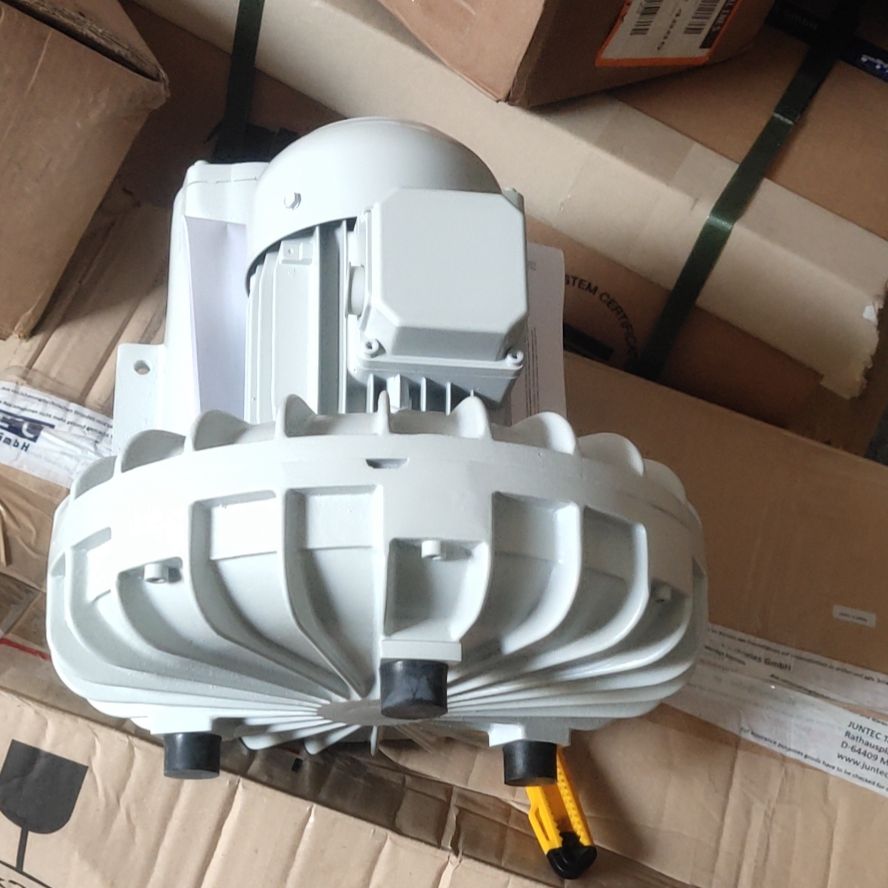
5) Special case: double-inlet / double-outlet fans
Same logic as single-inlet/outlet:
Blowing: connect all outlets to supply; inlets breathe naturally or via inlet bell/hood.
Suction: route all outlets to exhaust; connect all inlets to suction ducting, each with proper filtration, to prevent uneven loading.
6) Troubleshooting after switching
Weak suction: suction-side leaks or clogged filter—re-seal joints, clean/replace filters.
Low blowing airflow: outlet valve not fully open or duct has sharp bends—open valves, smooth duct routing.
Noise/vibration: debris ingestion or loose duct connections—stop and inspect impeller; re-fix duct supports.
Motor overheating: outlet restricted in suction mode or excessive system resistance—open discharge, reduce losses (larger duct, fewer bends).
Summary: Switch modes by re-routing ducts and valves, not by reversing rotation. Key rules: protect the inlet, seal the suction side, never dead-head the outlet. For occasional changes, manual reconnection works; for frequent changes, add a diverter valve for fast switching.